
by Candice Finn, LPC
Specializes in trauma-informed care and existential therapy
Understanding Emotional Sensitivity, the Nervous System, and Pathways to Healing
Have you ever been told that you’re “too sensitive,” “too emotional,” or that you need to “toughen up”?
Have you had experiences where your feelings, reactions, or needs were dismissed, minimized, or misunderstood?
Do loud environments, bright lights, busy schedules, or strong emotions leave you feeling overwhelmed or drained?
Do you find yourself deeply affected by other people’s moods, struggling to recover after stressful experiences, or needing more time than others to recharge?

Perhaps you’re navigating grief, burnout, chronic stress, hormonal changes, a major life transition, or the unique challenges that can come with being neurodivergent.
You may feel chronically misunderstood, become overwhelmed when demands pile up, struggle to switch between tasks, forget everyday responsibilities, or find it difficult to finish what you’ve started. Maybe you criticize yourself often, have experienced marginalization or discrimination, or burn out quickly in social situations.
If any of this sounds familiar, there may be a reason.
Research increasingly suggests that some people are biologically wired to process emotions, experiences, and sensory information more deeply than others. Emotional sensitivity is not a weakness, character flaw, or lack of resilience. Rather, it reflects differences in how the brain and nervous system respond to the world around us.
Understanding these differences can help transform self-criticism into self-awareness and provide a pathway toward greater balance, resilience, and well-being.
What Is Emotional Sensitivity?
Emotional sensitivity is often linked to a personality trait called sensory processing sensitivity (SPS). SPS describes differences in how deeply the brain processes information — both from the environment and from emotions.
People with higher levels of sensitivity often notice subtleties that others miss, experience emotions more deeply, and become overwhelmed more easily when demands, stressors, or stimulation accumulate. For some individuals — especially those who are neurodivergent — this heightened processing can also contribute to challenges with focus, executive functioning, transitions, and recovery from stress.
This trait may relate to being neurodivergent.
“Neurodivergence is an umbrella term that encompasses a range of neurodevelopmental, cognitive, and mental health differences, including autism, attention deficit hyperactivity disorder (ADHD), dyspraxia, dyslexia, dyscalculia, obsessive-compulsive disorder (OCD), Tourette syndrome, tic disorders, bipolar disorder, schizophrenia, and more”
(Kemp & Mitchelson, 2024).
There are many gifts and strengths associated with sensitivity, including empathy, creativity, artistic and musical ability, strong writing and storytelling skills, deep insight, and intuition.
What Does Emotional Sensitivity Look Like?
- Feeling emotions deeply and for longer periods of time
- Being highly empathetic and affected by the emotions of others
- Becoming overwhelmed by noise, crowds, conflict, or busy schedules
- Feeling drained after social interactions or stressful experiences
- Needing additional time and space to recharge
- Struggling with concentration when emotionally or sensorily overloaded
- Experiencing both positive and negative emotions with greater intensity
How Common Is It?
Roughly 20–30% of the population scores high in sensory processing sensitivity (Greven et al., 2019)
- Emotional sensitivity exists on a spectrum and is considered a normal variation in human temperament – not a disorder
- It is found across cultures, throughout the lifespan, and even across species, suggesting it may represent an important evolutionary trait
How Can It Impact Quality of Life?
Research shows that highly sensitive individuals may be more vulnerable to:
- Stress and anxiety
- Emotional exhaustion and burnout
- Sleep difficulties
- Depression
- Difficulty concentrating when overwhelmed
- Increased challenges during periods of significant life change or chronic stress
At the same time, sensitivity is often associated with important strengths, including:
- Deep empathy and compassion
- Creativity and imagination
- Strong intuition and self-awareness
- Meaningful relationships
- Greater responsiveness to positive experiences and supportive environments
The Strengths of Sensitivity
Sensitivity is not all challenge and struggle — it can also be a profound source of fulfillment, connection, and creativity.
Research suggests that people who process experiences more deeply are often especially responsive to beauty, meaning, relationships, and personal growth.
Many gifted individuals also report experiencing emotions and sensory input with unusual intensity (see Living with Intensity by Susan Daniels, PhD).
The same trait that can make someone more vulnerable to stress may also make them more responsive to supportive relationships, positive experiences, and effective therapy. In other words, highly sensitive people often benefit deeply from the right kind of support.

The Brain and Nervous System Connection
Sensitivity is not simply “all in your head.”
Brain imaging studies have found differences in networks involved in emotional awareness, empathy, attention, and self-regulation — particularly between areas involved in detecting important signals and areas involved in regulating attention and emotion. These differences may help explain why some people notice more, feel more, and react more strongly to both positive and negative experiences.
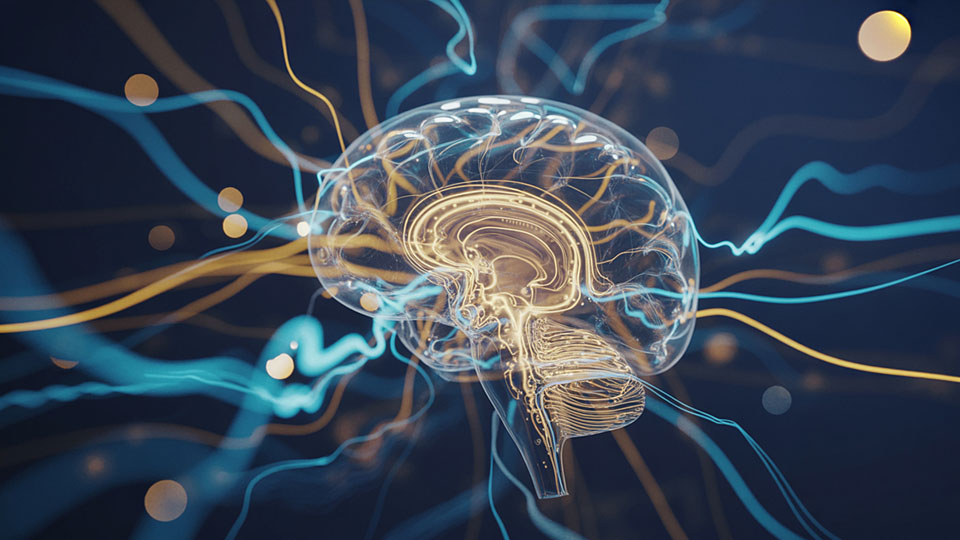
Many clinicians use concepts from Polyvagal Theory as a framework for understanding how the nervous system responds to cues of safety, connection, danger, and overwhelm. For sensitive individuals, this system may be especially responsive to environmental and emotional cues.
This might look like:
- Feeling overwhelmed in crowded or highly stimulating environments
- Becoming emotionally exhausted after conflict
- Feeling deeply impacted by another person’s mood
- Struggling to think clearly or stay organized during periods of stress
- Experiencing physical symptoms such as tension, fatigue, stomach discomfort, or a racing heart.
Understanding these responses can help people view their experiences through the lens of nervous system regulation rather than self-criticism.