Ketamine therapy has received a great deal of attention over the past several years, especially for people living with depression, PTSD, anxiety, and other mental health conditions that have not improved with traditional treatments. While the results can sound remarkable, many people still wonder one simple question.
How does ketamine actually work in the brain?
The answer is surprisingly different from most psychiatric medications. Rather than slowly changing levels of serotonin or dopamine over several weeks, ketamine works through a completely different pathway. It appears to temporarily increase the brain’s ability to form new connections, creating an opportunity to break out of long-standing patterns of thinking and emotional distress.
The neuroscience behind ketamine is complex, but the basic concepts are easier to understand than many people realize.
Your Brain Is Constantly Building Connections
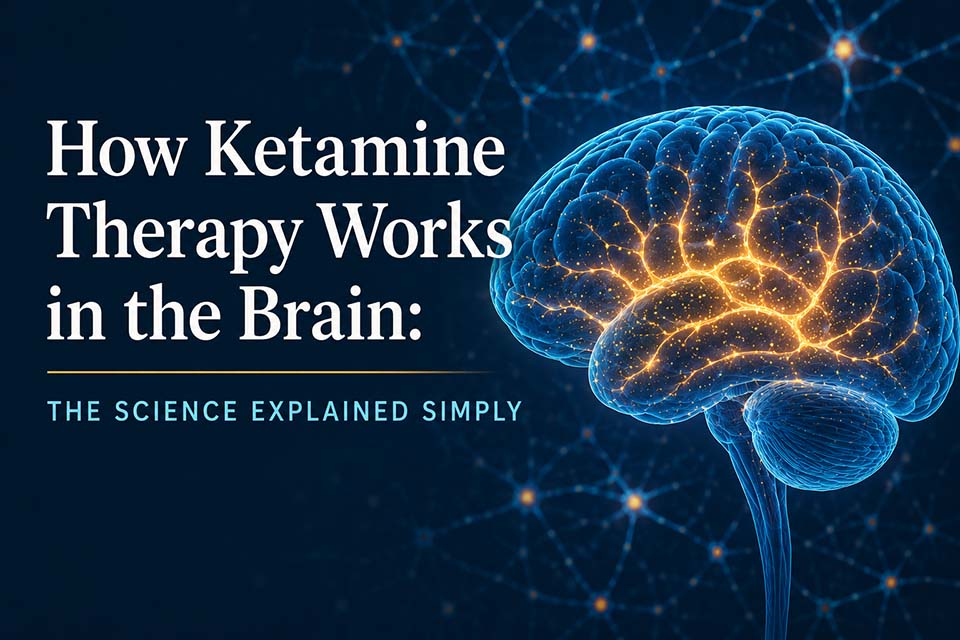
Your brain is made up of billions of nerve cells called neurons. These neurons communicate with one another through tiny connection points called synapses.
Every thought, emotion, memory, and behavior depends on these communication networks working together.
Healthy brains constantly strengthen, weaken, and reorganize these connections based on new experiences. This process is known as neuroplasticity, or the brain’s ability to adapt and change throughout life.
Neuroplasticity allows you to learn new skills, recover from difficult experiences, and develop healthier ways of thinking. It is one of the brain’s most important features.
Unfortunately, conditions such as major depression, chronic anxiety, and trauma can interfere with this process.
What Happens During Depression and Chronic Stress?
When someone experiences prolonged stress, trauma, or depression, the brain can become less flexible.
Instead of adapting to new experiences, certain pathways become deeply ingrained. Negative thoughts repeat themselves. Emotional responses become automatic. It can begin to feel as though the brain is stuck in the same patterns day after day.
Researchers believe chronic stress may also reduce the number of healthy connections between neurons in areas involved with mood regulation, decision making, and emotional processing.
This helps explain why many people describe depression as feeling trapped rather than simply feeling sad.
It’s not a lack of effort or willpower. The brain itself may have become less adaptable.
Ketamine Works Differently Than Traditional Antidepressants
Most antidepressants focus on neurotransmitters like serotonin or norepinephrine. While these medications can be very effective, they often take several weeks before significant improvements are noticed.
Ketamine follows another pathway.
Instead of primarily affecting serotonin, ketamine influences a neurotransmitter called glutamate. Glutamate is the brain’s most abundant excitatory neurotransmitter, meaning it plays a major role in communication between brain cells.
By affecting glutamate activity, ketamine appears to trigger a series of biological events that encourage the brain to build stronger, healthier neural connections.
Many researchers believe this is one reason some patients experience improvements much more quickly than they would with conventional antidepressants.
Think of It Like Fresh Snow
One way to understand ketamine’s effects is to imagine walking across the same snowy field every day.
Eventually, the same trail becomes deeply packed into the snow. Each time you walk, you naturally follow that familiar path because it’s the easiest route.
Depression and trauma can work similarly.
Your brain begins traveling the same emotional and cognitive pathways repeatedly. Negative beliefs, hopelessness, anxiety, or self-criticism become automatic because those pathways have been reinforced over time.
Ketamine may temporarily create fresh snow across the field.
The old trails are still there, but the brain becomes more capable of exploring new routes.
This is where therapy becomes incredibly important.
Why Ketamine Is Often Combined With Psychotherapy
Ketamine alone is not considered a cure.
While the medication may temporarily increase neuroplasticity, lasting change often depends on what happens during that window of increased flexibility.
This is why many providers offer Ketamine-Assisted Psychotherapy (KAP) rather than medication alone.
Therapy helps you process emotions, challenge unhelpful beliefs, explore difficult experiences, and build healthier patterns while the brain may be especially receptive to change.
Rather than simply reducing symptoms, the goal is to help create meaningful and lasting psychological growth.
If you’d like to learn more about how this approach works, explore Ketamine-Assisted Psychotherapy at Amavi to learn about the treatment process, who may be a candidate, and what to expect during care.
What Happens During a Ketamine Session?
Every treatment plan is individualized, but many people describe ketamine sessions as different from traditional therapy appointments.
Depending on the type of ketamine being used and the clinical setting, patients may experience:
- A sense of deep relaxation
- Changes in perception of time
- Enhanced introspection
- Emotional distance from difficult memories
- Greater openness to exploring thoughts and feelings
Some people describe the experience as feeling dreamlike, while others remain fully aware of their surroundings.
These effects are temporary and occur under medical supervision.
Afterward, many patients participate in therapy or integration sessions to help make sense of what they experienced and apply those insights to daily life.
What Conditions May Benefit From Ketamine Therapy?
Research into ketamine continues to expand, but studies have shown promising results for several mental health conditions, particularly when other treatments have not provided adequate relief.
Ketamine-assisted psychotherapy may be considered for individuals experiencing:
- Treatment-resistant depression
- Major depressive disorder
- Anxiety disorders
- Post-traumatic stress disorder (PTSD)
- Obsessive-compulsive disorder (OCD)
- Chronic emotional distress
- Certain chronic pain conditions
Not everyone is an appropriate candidate, which is why a comprehensive psychiatric evaluation is an important first step before beginning treatment.
Is the Science Still Evolving?
Yes.
Although ketamine has been safely used in medicine as an anesthetic for decades, researchers continue learning more about exactly how it produces its antidepressant effects.
Scientists now understand many of the biological mechanisms involved, including glutamate signaling, increased synaptic connectivity, and improved neuroplasticity. However, there is still much to discover about why some people respond better than others and how treatment protocols can continue to improve.
The encouraging news is that the growing body of research continues to support ketamine as an important option for many people who have struggled with traditional treatments alone.
A New Opportunity for Change
Living with depression, trauma, or anxiety can make it feel as though your brain is working against you. When familiar patterns repeat over months or years, it can be difficult to imagine that things could feel different.
Ketamine therapy does not erase painful experiences or instantly solve mental health challenges. What it may do is create an opportunity for the brain to become more flexible again, making it easier to develop healthier thought patterns, process difficult emotions, and engage more fully in psychotherapy.
At Amavi Integrative Mental Health, ketamine treatment is approached thoughtfully and collaboratively. By combining medical expertise with compassionate psychotherapy, the goal is to help patients create meaningful, lasting change rather than simply managing symptoms.
If you’re curious whether Ketamine-Assisted Psychotherapy may be right for you, the therapists at Amavi can help you understand your options and determine whether this innovative treatment fits your individual needs.